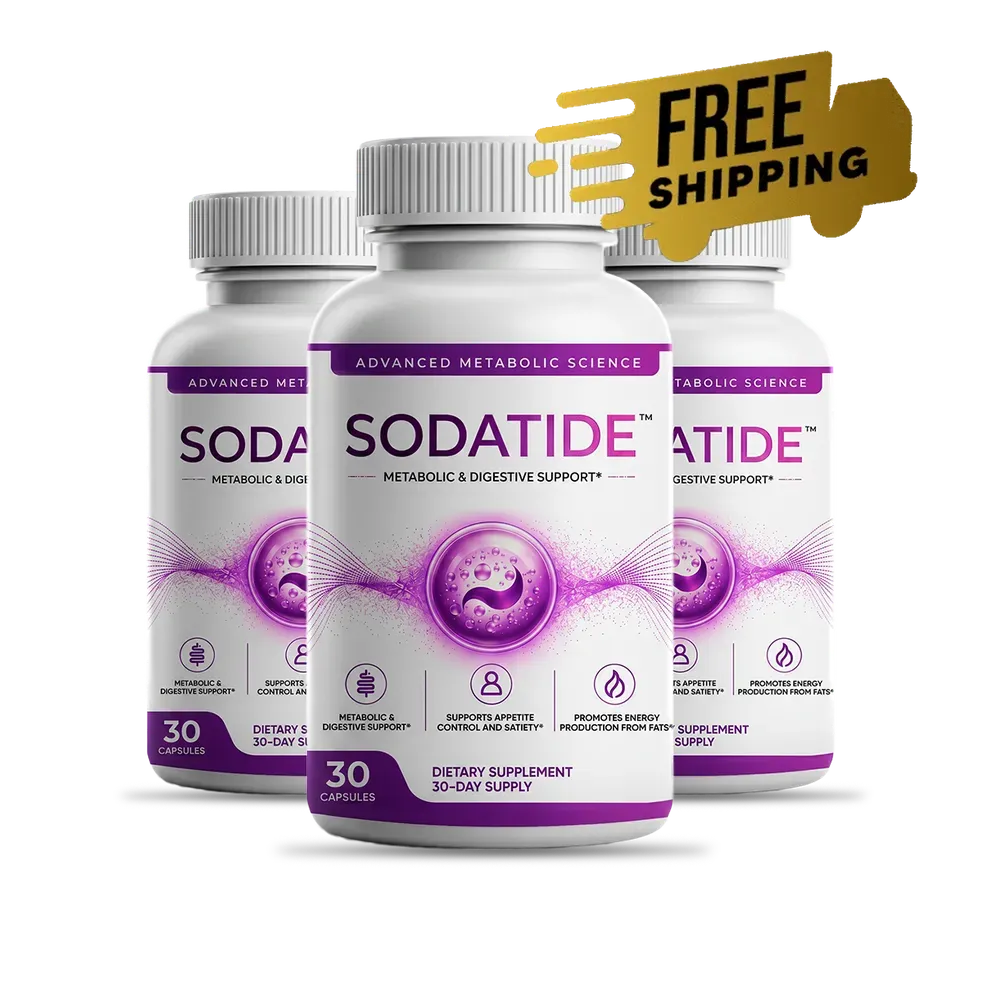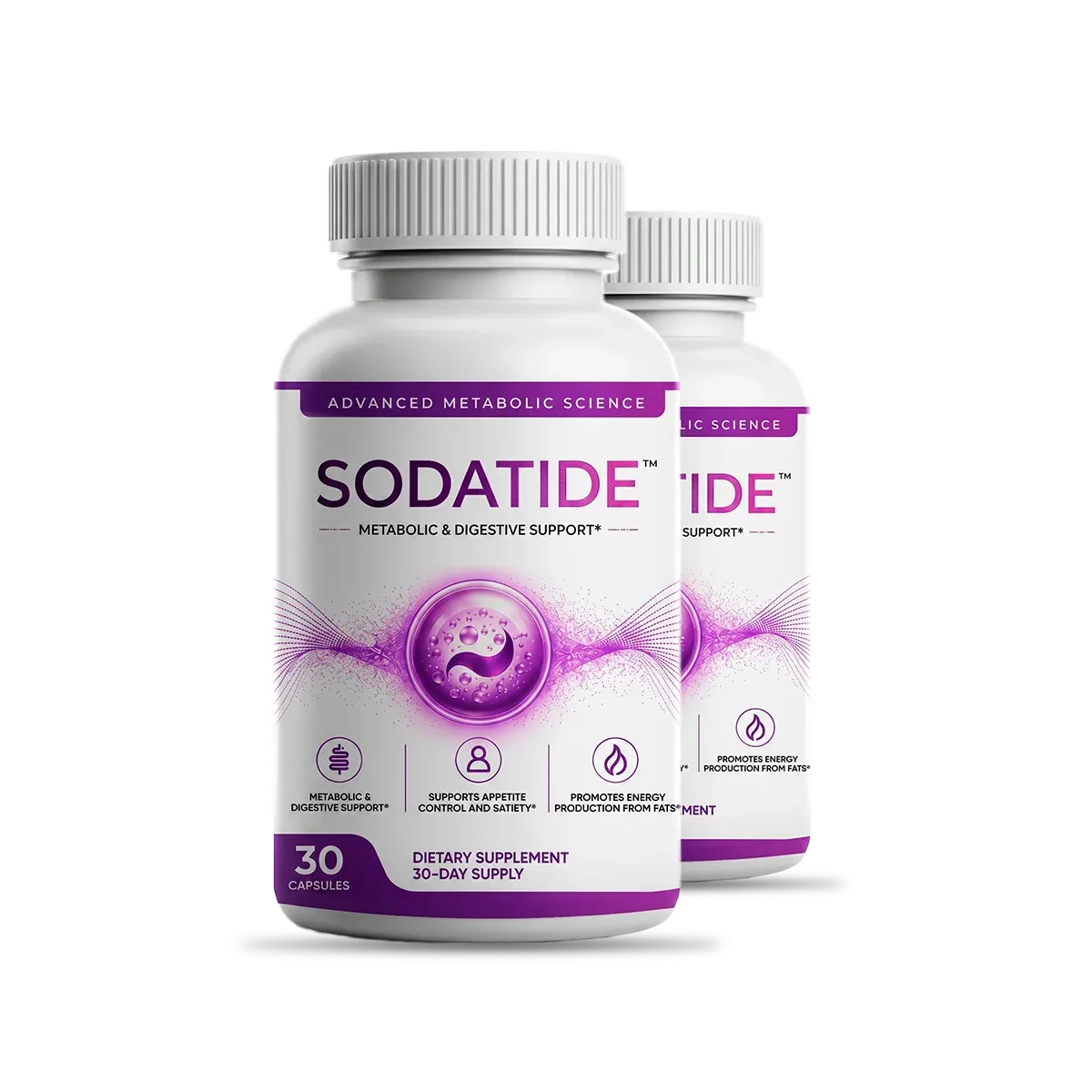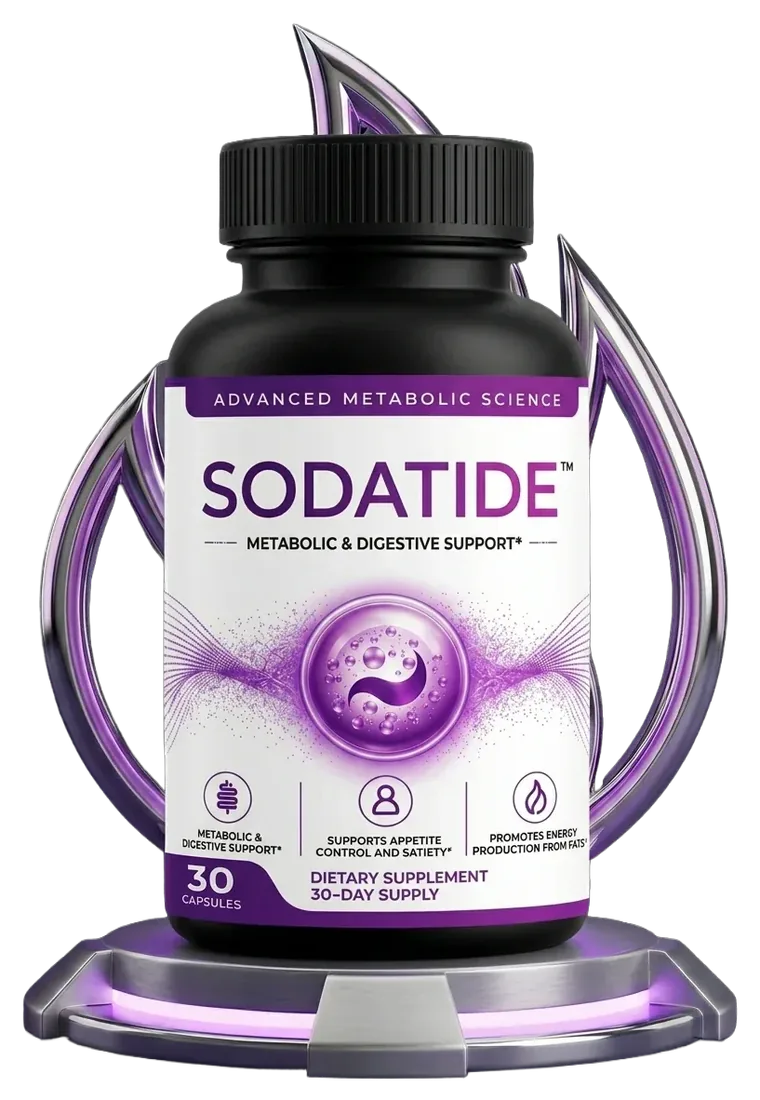
Sodatide Testing & Quality: What the Seals Mean and What Is Published
Quick answerSodatide carries 12 seals, including GMP and made in an FDA-registered facility. Those describe how and where it is made; they are not an FDA approval, because the FDA does not approve supplements. A CoA reference (SOD-6898-26-SO) exists for lot SOD-26/SO-6898, but no lab certificate, CFU count or third-party test has been published.
How is Sodatide made and checked?

Sodatide is made in the USA with globally sourced ingredients. The pack says it is made in an FDA-registered facility that follows GMP, the federal rules for supplement makers.
Those are real rules with real weight. They require written specs, batch records and testing for identity. What they do not do is put the results in public view.
Some of the seals are backed by the label itself. Others would need a lab report that has not been released to buyers.
What does each seal on the Sodatide pack mean?
The pack shows twelve seals and stamps. They describe the product or the purchase policy. None of them is an endorsement by a government agency or outside lab.

Says the maker follows GMP rules for supplements (21 CFR Part 111). The seal is a claim by the brand. No third-party certificate number has been published.

Describes the factory, not the product. FDA does not approve supplements, and FDA does not issue certificates for facility registration.

The label reads “Made in the USA with globally sourced ingredients.” The capsules are made here; some raw materials come from abroad.

A brand claim that no genetically modified ingredients are used. No outside verifier is named.
The actives are plant fibers and bacteria. The capsule and flow agents (cellulose, magnesium stearate, silica) are standard processing aids.

Fits the label: the capsule shell is hypromellose, a plant-based material.

Nothing on the ingredient list contains gluten. No gluten test result has been published.

No dairy ingredients appear on the label.

A marketing seal. Purity would be shown by a lab certificate, which has not been published for buyers.

The brand has not named the doctor. We cannot confirm who formulated it, so we give this seal no weight.

Refers to the 60-day refund policy. It covers your purchase and promises no particular result.

Refers to the order desk listed in the footer. Our team cannot see orders.
Some seals match the label closely, such as vegetarian and dairy free. Others, like “guaranteed pure,” would need a published lab report to mean much.
What does GMP mean for a dietary supplement?
GMP stands for Good Manufacturing Practice. For supplements sold in the US, the rules sit in 21 CFR Part 111, a federal regulation that applies to every maker, seal or no seal.
The rules ask makers to set specs for identity, purity, strength and composition. They must keep batch records, test incoming ingredients and handle complaints in writing. The FDA can inspect plants to check.
So a GMP seal is a promise to follow rules that already apply. It becomes stronger when an outside auditor issues a certificate. For Sodatide, no such certificate number has been published.
Is Sodatide approved by the FDA, or made in an FDA-registered facility?
Sodatide is made in an FDA-registered facility. It is not approved by the FDA, and no supplement is. The FDA says plainly that it does not have the authority to approve dietary supplements before they are marketed (FDA, Q&A on Dietary Supplements).
Registration means the factory is on the FDA's list. It is a listing, not a stamp of quality on any product made there (FDA, Is It Really FDA Approved?).
| Term | What it means | Does it apply to Sodatide? |
|---|---|---|
| FDA approval | A pre-market review for safety and effectiveness. By law this does not exist for dietary supplements (FDA, Is It Really FDA Approved?). | No, and no supplement can claim it |
| FDA-registered facility | The factory is listed with the FDA. Registration is a listing, not a certificate or a product review. | Yes, the pack says so |
| GMP (21 CFR Part 111) | Federal rules on how supplements are made, tested, labeled and recorded. | Claimed on the pack seal |
| Third-party GMP audit | An outside auditor checks the plant and issues a certificate. | Not published |
| Certificate of analysis (CoA) | A lab report for one batch, listing test results. | Reference SOD-6898-26-SO only; not published |
| Structure-function claim | A label claim about body function, marked with an asterisk and not reviewed by the FDA. | Yes, all three label claims |
What Sodatide testing has been published, and what has not?
The label amounts, the lot number and a CoA reference are published. The lab report behind that reference is not, and neither is a CFU count.
This matters most for the probiotic blend. Probiotic benefits depend on the strain and on the number of live cells, often about 1 billion CFU or more per serving (Hill et al., 2014). Without those numbers, nobody can compare Sodatide with the studies.
| Item | Status | Why it matters |
|---|---|---|
| Ingredient amounts | Published on the label | You can check inulin 211 mg, resistant starch 100 mg, blend 36 mg |
| Lot number | Published: SOD-26/SO-6898 | Lets a batch be traced |
| CoA reference | Published: SOD-6898-26-SO | Points to a batch record |
| CoA document and lab name | Not published | Would show what was tested and by whom |
| CFU per strain | Not published | The main measure of probiotic strength |
| Strain codes | Not published | Probiotic effects depend on the exact strain |
| Live or pasteurized Akkermansia | Not published | The safety review covers the pasteurized form |
| Heavy metal or microbe tests | Not published | Common checks for plant-based ingredients |
| Name of formulating doctor | Not published | Needed before the doctor seal means anything |
What testing can buyers ask for?
You are entitled to ask. These five questions are fair, specific and easy for a maker to answer if the records exist.
Ask for the CoA for your lot
Give the order desk your lot number and ask for the certificate of analysis. The current reference is SOD-6898-26-SO.
Ask for the CFU count
Ask how many live cells each capsule holds at the time of making, and how many are expected at the best-before date.
Ask for strain codes
A strain code (letters and numbers after the species name) lets you match the product to published research.
Ask which Akkermansia form is used
Live and pasteurized forms are handled differently in safety reviews. The label does not say which is inside.
Ask who audits the factory
If a third party checks GMP compliance, the auditor's name and certificate number can be shared.
Call the order desk or email the sales inbox. If you get a document, we would like to see it too, so we can link it for everyone.
How does storage protect Sodatide quality at home?
Quality does not stop at the factory door. Probiotics are living things, and heat, light and moisture wear them down over time.
The label asks you to refrigerate after opening and to keep the bottle away from heat, light and humidity. Close the cap tightly after each use. Our guide to storing probiotic capsules covers travel and hot weather.
Fridge after opening
Cold slows the loss of live bacteria. A door shelf works; avoid the freezer.
No sun, no hot car
A parked car in summer gets far hotter than any room. That is hard on any probiotic.
Keep it dry
Humid bathrooms are a poor spot. Moisture can clump capsules and harm the bacteria.
How can you check the bottle in your hand?
Start with the seal under the cap, then the lot number and best-before date on the base. Match the Supplement Facts to the label panel on this site.
The full ten-minute check, with a genuine-versus-warning-sign table, is on the batch verify page. How we gather and label facts is explained on the about page.
Sodatide testing and quality FAQ
Is Sodatide approved by the FDA?
No. The FDA never approves dietary supplements before they go on sale. The pack says Sodatide is made in an FDA-registered facility, which describes the factory, not the product.
What does Sodatide’s GMP seal stand for?
It says the maker follows Good Manufacturing Practice rules for supplements, found in 21 CFR Part 111. No third-party GMP certificate number has been published.
Has Sodatide been third-party tested?
No third-party test result has been published. A certificate of analysis reference exists for the current lot, but the certificate itself is not public.
How many CFU are in each Sodatide capsule?
The label does not publish a CFU count. It lists a 36 mg probiotic blend of three species without a live cell number.
Is Sodatide’s Akkermansia live or pasteurized?
The label does not say. The brand has not published which form it uses.
Does the doctor formulated seal name a doctor?
The brand has not named one. Without a name, we cannot confirm who formulated it, so we give that seal no weight.
How should I store Sodatide to protect quality?
Refrigerate after opening and keep it away from heat, light and humidity, as the label directs. Keep the cap tight.
Can I ask for test results?
Yes. Call the order desk and ask for the certificate of analysis for your lot. We will link any certificate the brand releases.
Ready to try Sodatide?
One capsule a day, 30 capsules per bottle, from $49 a bottle with a 60-day money-back guarantee. Questions first? Every desk is listed on the contact page.