 211 mg
Chicory Root Inulin
Cichorium intybus (root)
A soluble fiber from chicory root. In the gut it feeds bifidobacteria and other friendly bacteria. It is the most-studied prebiotic in the world.
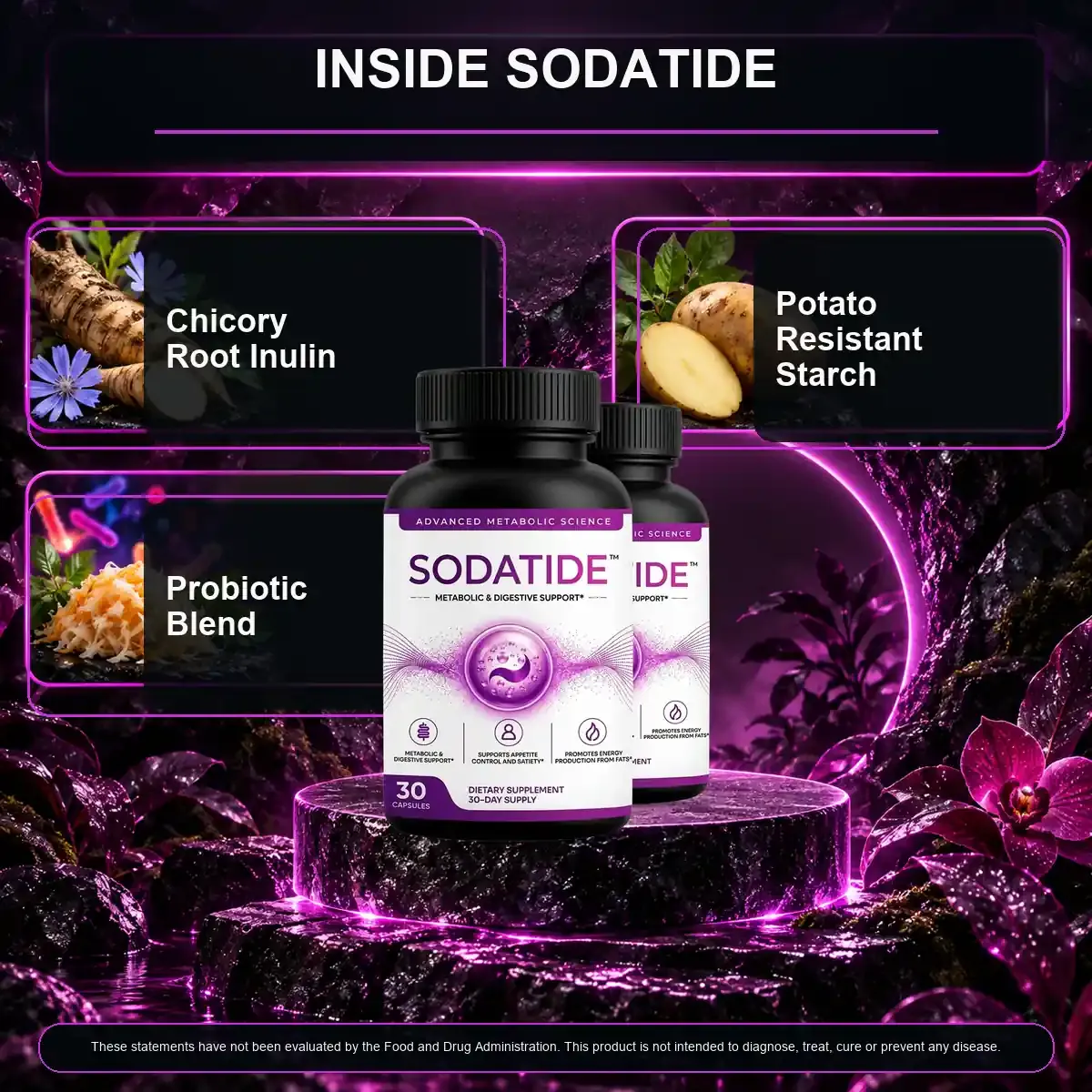
Quick answerEach Sodatide capsule has three actives: chicory root inulin, potato resistant starch and a probiotic blend.
The amounts are 211 mg inulin, 100 mg resistant starch and 36 mg of B. infantis, C. butyricum and A. muciniphila, for 347 mg in total. The shell is hypromellose.
Read the full Supplement Facts label.
Sodatide has three active ingredients and four helpers. The actives are two prebiotic fibers and one blend of three probiotic bacteria. Together they weigh 347 mg per capsule.
The helpers make the capsule itself work. They form the shell, fill the space and keep the powder flowing. Each active is shown below with the amount printed on the Supplement Facts panel.
211 mgCichorium intybus (root)
A soluble fiber from chicory root. In the gut it feeds bifidobacteria and other friendly bacteria. It is the most-studied prebiotic in the world.
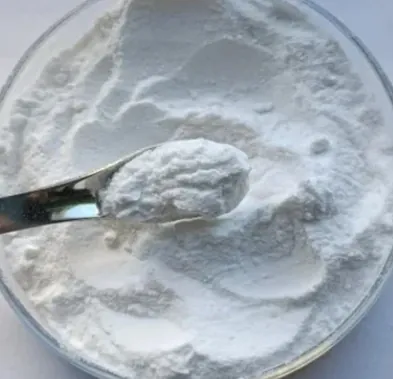
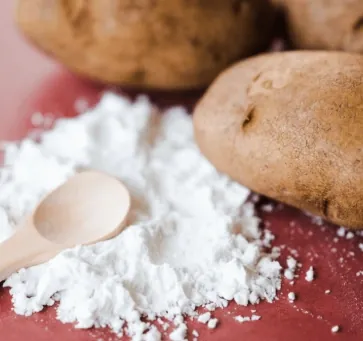 100 mg
Solanum tuberosum (tuber)
Starch that resists digestion in the small intestine. It travels to the colon, where bacteria ferment it into short-chain fatty acids such as butyrate.
 36 mg
Bifidobacterium infantis, Clostridium butyricum, Akkermansia muciniphila
Three bacteria named on the label: Bifidobacterium infantis, Clostridium butyricum and Akkermansia muciniphila. The label does not give CFU or strain codes.
A product that pairs a prebiotic with a probiotic is called a synbiotic. The fiber is food for bacteria. The probiotic adds named species on top of the ones already living in your gut.
Most gut products carry only one of these halves. Sodatide carries both, in a single daily capsule. The mechanism is covered step by step on how Sodatide works.
Chicory root inulin is the largest ingredient in Sodatide, at 211 mg. Inulin is a chain of fructose units that human enzymes cannot split. So it passes the stomach and small intestine and reaches the colon intact.
Once there, it becomes food for bifidobacteria and other microbes. In one trial, 12 g a day of chicory inulin for four weeks raised Bifidobacterium and made stools softer (Vandeputte et al., 2017). Results vary by inulin type, though. A long-chain inulin did not raise bifidobacteria at 10 g a day in another study (Bouhnik et al., 2004).
Most inulin sold commercially is extracted from chicory root. It is also found in onions, garlic, leeks and bananas. Our post on inulin vs. resistant starch compares the two fibers side by side.
Potato resistant starch is the second fiber in Sodatide, at 100 mg. It is starch that does not break down into sugar in the small intestine. Raw potato starch is one of the classic sources.
Resistant starch feeds a different set of bacteria than inulin does. Many of them make butyrate, a short-chain fatty acid that fuels the cells lining the colon. In a study of 28-34 g a day of resistant potato starch, butyrate rose by about 29% on average, and about 63% of people responded (Baxter et al., 2019).
Pairing two fibers spreads the food across more kinds of bacteria. That is the main reason formulators combine them. Note that some well-known resistant starch research used maize, not potato (Maki et al., 2012).
Bifidobacterium infantis is one of the first bacteria to settle in a breastfed baby's gut. It belongs to the bifidobacteria, the same group that inulin feeds. That makes it a natural partner for the fiber in Sodatide.
The main human research used one strain, 35624. In 362 women with IBS, only the 100 million CFU dose of that strain beat placebo for symptoms (Whorwell et al., 2006). Probiotic effects are tied to specific strains, so results from one strain do not carry over to all of them (Hill et al., 2014).
Clostridium butyricum is named for what it makes: butyrate. It forms spores, a tough resting stage that helps it survive stomach acid and storage. It has been sold as a probiotic in Japan for many years.
Safety work on one strain, MIYAIRI 588, found it lacked the main toxin genes linked to harmful Clostridium species (Isa et al., 2016). Rare bloodstream infections have been traced to C. butyricum products, mostly in people with weak immune systems (Sada et al., 2024). That is why anyone in that group should talk to a doctor first. See Sodatide side effects for the full picture.
Akkermansia muciniphila lives in the mucus layer that coats the inside of the gut. Its name means "mucus lover." It has drawn a lot of research interest over the past decade.
In a small trial of 32 adults, 10 billion pasteurized cells a day for three months improved insulin sensitivity by about 29% (Depommier et al., 2019). European food safety experts later judged pasteurized Akkermansia safe for adults up to 34 billion cells a day (EFSA NDA Panel, 2021).
Few gut products carry this species at all. Our explainer on Akkermansia muciniphila covers the research in more depth.
The label lists four other ingredients. None of them is an active. They exist so the capsule can be made, filled and stored well.
The capsule shell. It is made from plant cellulose, so it holds the powder without any gelatin.
A fine plant-fiber powder. It fills out the capsule so every one holds the same amount.
A flow agent. A tiny amount keeps the powder from clumping inside the filling machine.
An anti-caking agent. It soaks up stray moisture so the powder stays loose and dry.
These four are among the most common helpers in capsule supplements. The amounts are small and are not printed, which is normal for inactive ingredients.
| Ingredient | Amount per capsule | Role | Source part |
|---|---|---|---|
| Chicory root inulin | 211 mg | Prebiotic fiber | Root of Cichorium intybus |
| Potato resistant starch | 100 mg | Prebiotic resistant starch | Tuber of Solanum tuberosum |
| Bifidobacterium infantis | Part of 36 mg blend | Probiotic bacterium | Cultured bacteria (strain not published) |
| Clostridium butyricum | Part of 36 mg blend | Probiotic, butyrate producer | Cultured bacteria (strain not published) |
| Akkermansia muciniphila | Part of 36 mg blend | Probiotic, gut lining species | Cultured bacteria (live or pasteurized not published) |
| Hypromellose | Not listed | Vegetarian capsule shell | Plant cellulose |
| Microcrystalline cellulose | Not listed | Filler | Plant cellulose |
| Magnesium stearate | Not listed | Flow agent | Mineral salt of a fatty acid (source not published) |
| Silica | Not listed | Anti-caking agent | Mineral (silicon dioxide) |
The label is short, and the gaps say as much as the lines. Sodatide lists no caffeine, no green tea extract and no other stimulant. It lists no added sugar, sweetener, flavor or color.
There is no gelatin, because the shell is hypromellose. There are no dairy or wheat ingredients. The pack carries vegetarian, gluten free and dairy free seals, which match what the label lists.
You swallow the capsule whole, so there is no taste to mask. That is why no flavor system is needed.
The two fibers and three bacteria follow one path through the gut. Here is the order in which they do their work.
Neither inulin nor resistant starch is broken down in the small intestine. Both reach the large intestine whole.
Bifidobacteria and other gut microbes ferment the fibers. This is the prebiotic half of the formula.
The probiotic blend adds bacteria that are studied for gut comfort, butyrate output and the gut lining.
Acetate, propionate and butyrate are the main products. They fuel colon cells and act as signals in the body.
Why the fridge matters
Probiotics are living or once-living cells, and heat can harm them. The label asks you to refrigerate the bottle after opening. Our guide to storing probiotic capsules explains why.
The fiber amounts in Sodatide are much smaller than the amounts used in fiber studies. The probiotic amount is given in milligrams, while studies count cells, so it cannot be compared directly.
A smaller dose does not prove the product fails. It does mean the studies above tested a different amount. The table sets the numbers side by side.
| Ingredient | Sodatide (per capsule) | Doses used in studies | Gap | Source |
|---|---|---|---|---|
| Chicory root inulin | 211 mg (0.21 g) | 5-21 g a day | About 25 to 100 times lower | (Vandeputte et al., 2017) |
| Potato resistant starch | 100 mg (0.1 g) | 15-34 g a day | About 150 to 340 times lower | (Baxter et al., 2019) |
| Probiotic blend | 36 mg total, CFU not published | Akkermansia: 10 billion cells a day; B. infantis 35624: 100 million CFU | Cannot be compared: milligrams are not CFU | (Depommier et al., 2019) |
If you want studied fiber amounts, beans, oats, vegetables and fruit add grams, not milligrams. Sodatide fits well as an easy daily add-on to those foods. Directions are on how to take Sodatide.
Sodatide has chicory root inulin (211 mg), potato resistant starch (100 mg) and a 36 mg probiotic blend. Named in the blend are Bifidobacterium infantis, Clostridium butyricum and Akkermansia muciniphila.
About 311 mg, which is 0.31 grams. That comes from 211 mg of inulin plus 100 mg of resistant starch.
The CFU count is not published. The label gives only the combined weight of the blend, 36 mg, for all three species.
The label does not say. Both forms exist on the market, and the brand has not published which one it uses.
No gluten, dairy or gelatin ingredients appear on the label. The pack carries gluten free, dairy free and vegetarian seals, and the shell is plant-based hypromellose.
It is a flow agent. It keeps the powder from sticking to the capsule-filling machines, and it is used in a very small amount.
No. The label lists no caffeine, no herbal stimulants and no added sugar. The actives are two fibers and three bacteria.
One capsule a day, 30 capsules per bottle, from $49 a bottle with a 60-day money-back guarantee. Questions first? Every desk is listed on the contact page.