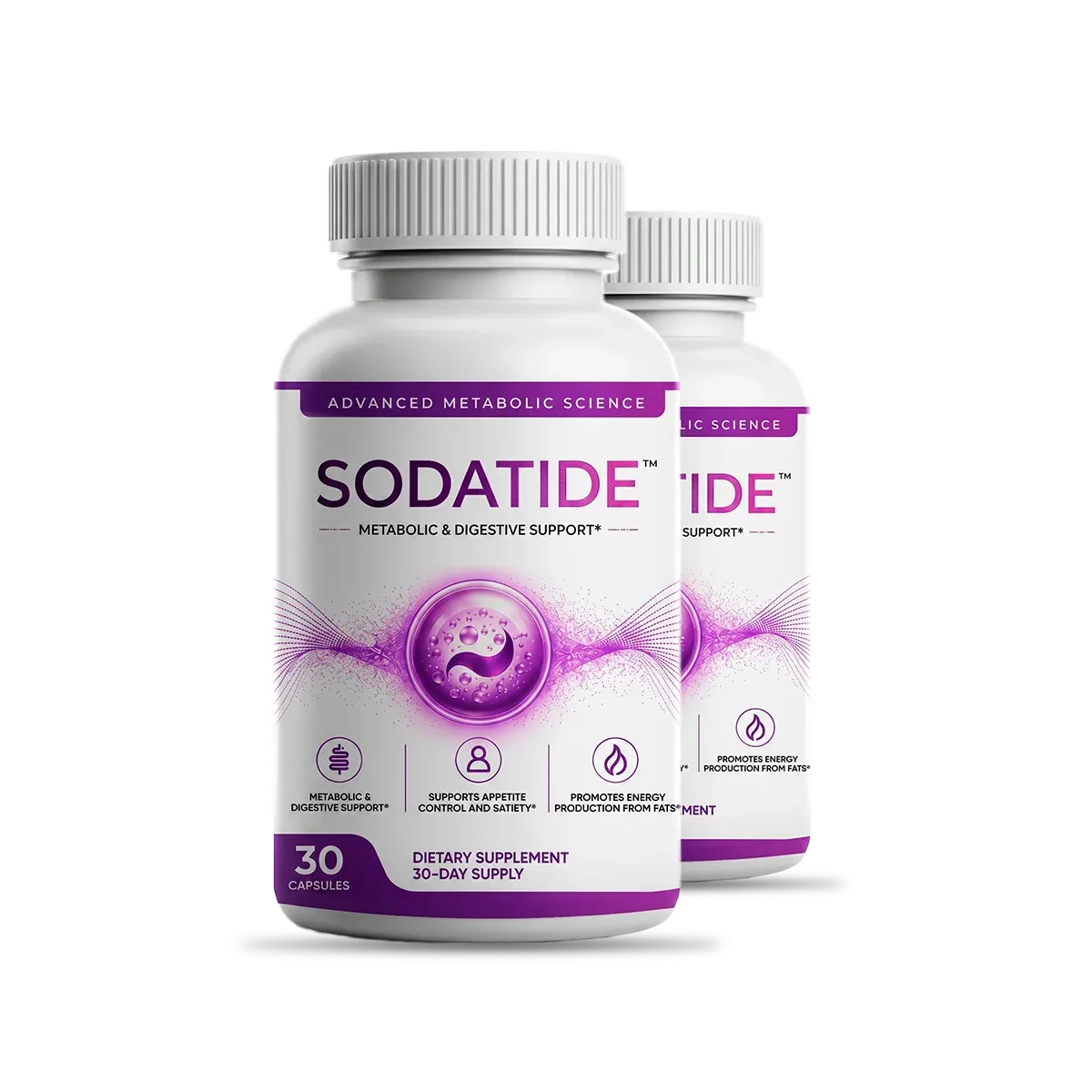
Akkermansia Muciniphila Explained: What Sodatide's Star Bacterium Can and Can't Do
Quick answerAkkermansia muciniphila is a gut bacterium that lives in the mucus lining of the intestine. In a small trial of 32 adults, 10 billion pasteurized cells a day for 3 months improved insulin sensitivity by about 29%. European regulators judged the pasteurized form safe up to 34 billion cells a day. Sodatide does not publish its Akkermansia count or form.
What is Akkermansia muciniphila?
Akkermansia muciniphila is a bacterium that lives in the mucus layer lining your intestine. The word "muciniphila" means mucin-loving. Mucin is the main protein in gut mucus, and this bacterium uses it as food.
It is common in healthy adults. Researchers first described it only about twenty years ago. Since then, it has become one of the most-discussed gut bacteria in metabolic research.
Most of that research is in animals. Human data are much thinner, which is why the details of each study matter. Sodatide includes it as one of three species in its probiotic blend, alongside B. infantis and C. butyricum. The ingredients page lists the full formula.
What did the key human trial of Akkermansia find?
The best-known human trial gave adults 10 billion pasteurized Akkermansia cells a day for 3 months (Depommier et al., 2019). Insulin sensitivity improved by about 29%. The authors called it a proof-of-concept, exploratory study.
Who took part
The volunteers were 32 adults with overweight or obesity who completed the study. That is a small group. Small trials can find a signal, but they cannot confirm one.
What was measured
The main goals were safety, tolerance and metabolic markers such as insulin sensitivity. It was not designed as a weight-loss trial. It does not show that Akkermansia makes people lose weight.
Why the form matters here
The results that drew headlines came from the pasteurized form, meaning heat-treated bacteria that are no longer alive. That detail runs against the usual idea that probiotics must be live to work.
Live vs. pasteurized Akkermansia: why does the form matter?
Live and pasteurized Akkermansia are not interchangeable, at least not on current evidence. The table sets out what is known.
| Question | Live Akkermansia | Pasteurized Akkermansia | Sodatide label |
|---|---|---|---|
| What it is | Living cells | Heat-treated, non-living cells | Form not published |
| Human dose studied | Not the source of the headline results | 10 billion cells a day (Depommier et al., 2019) | Count not published |
| EU safety opinion | Not covered | Safe up to 34 billion cells a day for adults (EFSA NDA Panel, 2021) | Not applicable |
| Storage need | Usually sensitive to heat and moisture | Less dependent on staying alive | Refrigerate after opening |
| How it is counted | CFU or cells | Cells | 36 mg for the whole 3-species blend |
The fridge instruction on the Sodatide label suggests at least part of the blend is live. The brand has not said which form its Akkermansia takes.
Is Akkermansia safe to take?
For the pasteurized form, the safety picture is fairly clear. The European Food Safety Authority reviewed it as a novel food in 2021. It judged pasteurized A. muciniphila safe for adults at up to 34 billion cells a day (EFSA NDA Panel, 2021).
Two limits come with that opinion. It applies to the pasteurized form only. And it does not cover pregnancy or breastfeeding.
Who should check with a doctor
The Sodatide label asks anyone pregnant or nursing, under 18, or with a known medical condition to consult a physician first. People with a weakened immune system should also ask a doctor before taking any probiotic.
For the other two species in the blend, see the side effects page.
Akkermansia plus two prebiotic fibers, once a day
Sodatide pairs A. muciniphila with B. infantis, C. butyricum, chicory inulin and potato resistant starch. From $49 a bottle with a 60-day money-back guarantee.

What about the study of a three-species formula?
One more study often comes up in Akkermansia articles. It tested a formula with the same three species found in Sodatide, plus inulin (Perraudeau et al., 2020). After-meal glucose improved compared with placebo.
Three details keep that result in context. The dose was six capsules a day. The people in the trial had type 2 diabetes, which is a different group from the healthy adults Sodatide is made for. And the company that made the formula funded and ran the trial.
So it shows that this combination of species has been studied. It does not show what one Sodatide capsule a day would do, and Sodatide is not a treatment for any condition.
What can Akkermansia do, and what can't it do?
What the evidence supports
- It is a normal, common resident of the healthy human gut
- Pasteurized cells improved insulin sensitivity by about 29% in a small trial (Depommier et al., 2019)
- The pasteurized form has a European safety opinion up to 34 billion cells a day (EFSA NDA Panel, 2021)
- The studied dose, 10 billion cells a day, gives buyers a clear benchmark
What it can't claim yet
- It has not been shown to cause weight loss in people
- The key trial had only 32 completing volunteers and ran 3 months
- Results for the live form do not match the pasteurized headlines
- Most Akkermansia research is still in animals, not people
How should you read Akkermansia headlines?
Akkermansia headlines often run ahead of the data. A few quick checks tell you how much weight a new claim deserves.
Check the form
Was the bacterium live or pasteurized? The two are not the same, and the strongest human data used pasteurized cells.
Check the dose
Look for a cell count. The key trial used 10 billion cells a day, and the EU safety ceiling is 34 billion.
Check the people
Was it a study in humans, mice or cells in a dish? How many people finished, and for how long?
Check who paid
Company-funded trials are common and can be sound. It still helps to know who ran the study.
Check the claim
A change in a lab marker is not the same as a change you would feel or see. Watch for jumps from one to the other.
The same checks work for any probiotic. Our gut health supplement checklist turns them into a scored list you can use before you buy.
How does the Akkermansia in Sodatide compare with the research?
Sodatide names Akkermansia muciniphila on its label, which few gut products do. The label does not give a cell count or say whether it is live or pasteurized. That makes a direct comparison with the research impossible.
| Measure | Key study | EFSA safety ceiling | Sodatide |
|---|---|---|---|
| Daily amount | 10 billion cells | 34 billion cells | Not published (part of a 36 mg blend) |
| Form | Pasteurized | Pasteurized | Not published |
| Length | 3 months | Not applicable | 30 capsules per bottle |
| Who | 32 adults with overweight or obesity | Adults, not in pregnancy or breastfeeding | Adults 18 and over |
What Sodatide does offer is Akkermansia paired with two prebiotic fibers and two other species in one capsule. Read how the fibers compare in inulin vs. resistant starch, and how the pieces work together in how Sodatide works.
Can food support Akkermansia in your gut?
Research on growing your own Akkermansia through diet is early. The safest general advice is a varied, fiber-rich diet that feeds a range of gut bacteria. There is no single food proven to raise it in people.
Fiber targets still apply. Most adults eat about 15 g a day against a suggested 22 to 34 g. Our gut health guide lists fiber per serving for common foods.
If you take Sodatide, protect the probiotic blend. The label says to refrigerate after opening. Our guide to storing probiotic capsules explains why heat and moisture matter.

Akkermansia muciniphila FAQ
What is Akkermansia muciniphila?
It is a bacterium that lives in the mucus layer lining the gut. Its name comes from its taste for mucin, the main protein in that mucus.
What dose of Akkermansia was studied in people?
The key human trial used 10 billion pasteurized cells a day for 3 months in 32 adults with overweight or obesity.
Is live or pasteurized Akkermansia better?
The headline human results and the European safety opinion both concern the pasteurized form. Whether live forms act the same way has not been settled.
Is Akkermansia safe?
The European Food Safety Authority judged pasteurized Akkermansia safe for adults up to 34 billion cells a day. That opinion did not cover pregnancy or breastfeeding.
Is Sodatide’s Akkermansia live or pasteurized?
Not published. The label names Akkermansia muciniphila in a 36 mg blend but does not state its form or cell count.
Does Akkermansia cause weight loss?
No trial has shown that. The key study measured insulin sensitivity and other markers. Sodatide makes no weight-loss claim.