Inulin vs. Resistant Starch: The Two Fibers in Sodatide Compared
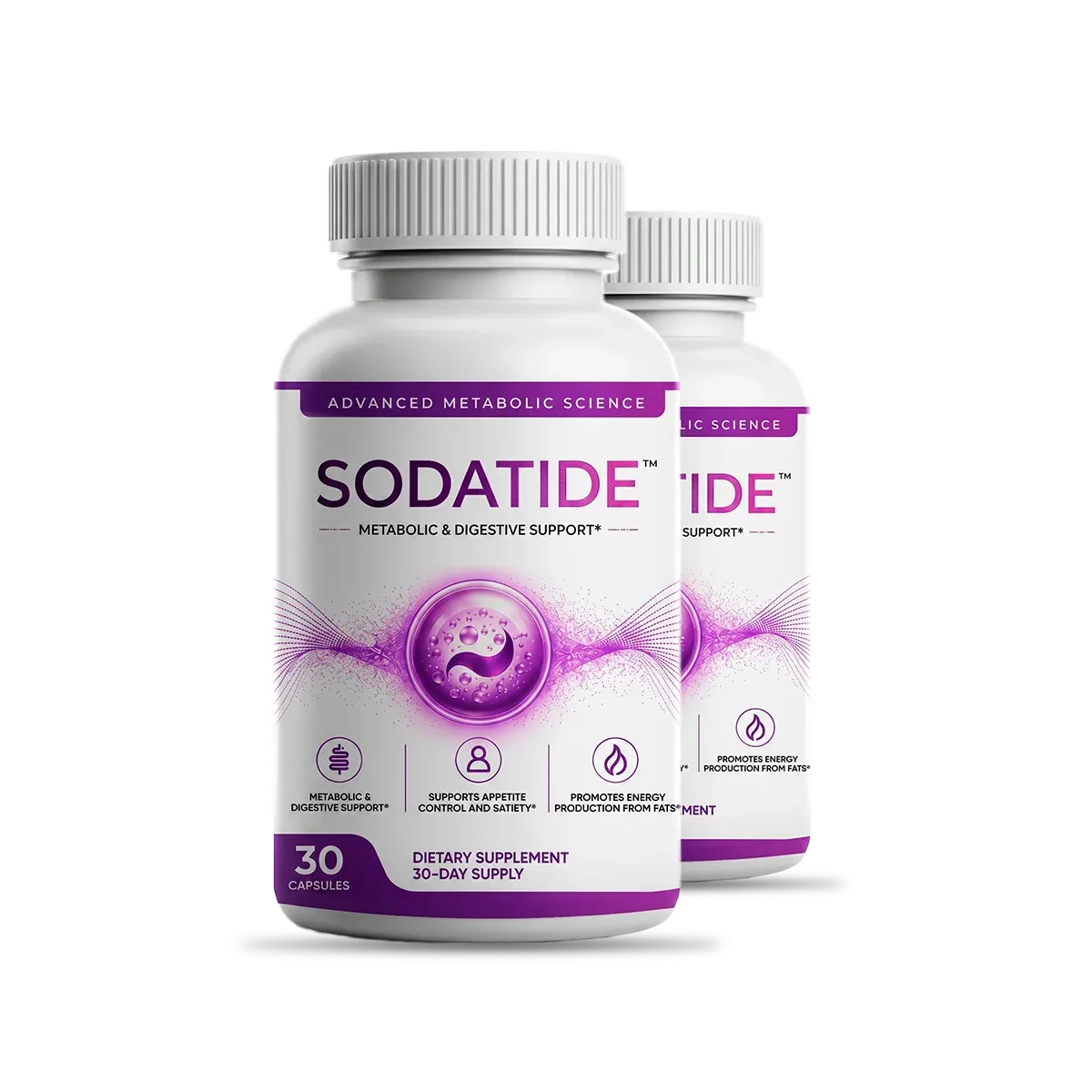
Quick answerInulin and resistant starch are both prebiotic fibers, but they differ. Inulin is a soluble fructose chain from chicory root that feeds bifidobacteria. Resistant starch is starch that escapes digestion and is linked to butyrate. Sodatide has 211 mg inulin and 100 mg resistant starch, far below the 10 to 34 g a day used in studies.
What are inulin and resistant starch?
Both are prebiotic fibers. Your small intestine cannot digest them, so they reach the colon intact. There, gut bacteria ferment them and make short-chain fatty acids.
Inulin is a chain of fructose units, usually capped with one glucose. It dissolves in water and tastes faintly sweet. Chicory root is the main commercial source.
Resistant starch is ordinary starch, a chain of glucose units, packed in a way your enzymes cannot break down. Raw potato starch is a common source. So are cooked and cooled potatoes, rice and beans.
Sodatide lists both on its label. For the full formula, see the Sodatide ingredients page.
How are inulin and resistant starch different?
The two fibers share a job but differ in almost every detail. Here is how they line up.
| Feature | Chicory root inulin | Potato resistant starch |
|---|---|---|
| Building block | Fructose chains (a fructan) | Glucose chains (a starch) |
| Dissolves in water | Yes | Mostly no |
| Taste and texture | Mildly sweet, smooth | Bland, chalky when raw |
| Best-known effect | Raises Bifidobacterium (Vandeputte et al., 2017) | Raises butyrate in many people (Baxter et al., 2019) |
| Dose in key study | 12 g a day for 4 weeks | 28 to 34 g a day |
| Common side effect | Gas and bloating at gram doses | Gas at gram doses |
| Main food sources | Chicory, onions, garlic, leeks, asparagus | Cooled potatoes and rice, beans, green bananas |
| Amount in Sodatide | 211 mg | 100 mg |
What does research say about chicory inulin?
Chicory inulin is the most-studied prebiotic, and its main effect is on bifidobacteria. The details depend heavily on the type and the dose.
It can raise bifidobacteria
In a 4-week trial, 12 g a day of chicory inulin raised Bifidobacterium and softened stools (Vandeputte et al., 2017). Bifidobacteria are among the bacteria most people want more of.
Chain length and dose matter
Not every inulin trial worked. Long-chain inulin at 10 g a day did not raise bifidobacteria in one trial (Bouhnik et al., 2004). So "inulin" on a label does not tell you everything.
Related fibers and appetite
A shorter cousin, oligofructose, was tested at 21 g a day for 12 weeks. It lowered the hunger hormone ghrelin and raised the fullness hormone PYY, and gas was common (Parnell & Reimer, 2009).
Tolerance
Up to 10 g of native inulin was well tolerated in testing, with gas and bloating the most common complaints (Bonnema et al., 2010).
What does research say about resistant starch?
Resistant starch research centers on butyrate, the short-chain fatty acid that fuels colon cells. Results vary a lot from person to person.
The four main types
Scientists sort resistant starch into types. Type 1 is trapped inside whole grains and seeds. Type 2 is raw starch granules, as in raw potato starch and green bananas. Type 3 forms when cooked starch cools. Type 4 is chemically modified. The Sodatide label says "potato resistant starch" but does not name the type.
Butyrate response
In one study, 28 to 34 g a day of resistant potato starch raised butyrate by about 29% on average. About 63% of people responded, so roughly a third did not (Baxter et al., 2019).
A maize study, not potato
Resistant starch from high-amylose maize, at 15 to 30 g a day, raised insulin sensitivity in men but not in women (Maki et al., 2012). That was a corn source, so it does not transfer directly to potato starch.
Both fibers, one daily capsule
Sodatide pairs chicory root inulin and potato resistant starch with three probiotic species. One capsule a day, from $49 a bottle, with a 60-day money-back guarantee.
Why does Sodatide use both fibers?
Sodatide pairs the two fibers because they are fermented by different bacteria and in different ways. Putting both in one capsule gives the gut two kinds of food rather than one.
Inulin: the bifidobacteria feeder
Inulin is the classic fuel for bifidobacteria, one of the groups in the probiotic blend.
Resistant starch: the butyrate route
Resistant starch is linked to butyrate, the main fuel for the cells lining the colon.
Plus three probiotics
The capsule adds B. infantis, C. butyricum and A. muciniphila, which makes it a synbiotic.
The idea is covered step by step in how Sodatide works. For the bacterium that gets the most attention, read Akkermansia muciniphila explained.
How do Sodatide's fiber amounts compare with the studies?
Here is the honest part. The amounts in Sodatide are milligrams, and the studies used grams. The table puts them side by side.
| Fiber | Sodatide per capsule | Study dose | Roughly how many times lower |
|---|---|---|---|
| Chicory root inulin | 211 mg (0.21 g) | 12 g a day (Vandeputte et al., 2017) | About 57 times |
| Potato resistant starch | 100 mg (0.1 g) | 28 to 34 g a day (Baxter et al., 2019) | About 280 to 340 times |
| Both together | 311 mg (0.31 g) | Daily fiber target of about 22 to 34 g | About 70 to 110 times |
So think of Sodatide's fibers as a small daily top-up, not a replacement for fiber-rich food. The Supplement Facts page reads the rest of the label line by line.
Which foods give you inulin and resistant starch?

Food gives far more of both fibers than any capsule. Mixing sources gives your bacteria variety too.
For inulin: onions, garlic, leeks, asparagus and chicory root. Jerusalem artichokes are another rich source.
For resistant starch: potatoes or rice cooked, then cooled (a potato salad counts), beans, lentils, oats and slightly green bananas.
Our gut health guide has a table of fiber per serving for common foods.
Do you have to choose between inulin and resistant starch?
You do not have to pick one. Most people do well eating both fibers from a range of plants, and the two work in different ways. Still, each has strengths worth knowing.
Where inulin stands out
- Well studied for raising bifidobacteria
- Easy to find in powders and capsules
- Dissolves in drinks and tastes mildly sweet
- Found in everyday foods like onions and garlic
Where resistant starch stands out
- Linked to butyrate, the colon's main fuel
- Forms naturally when you cook and cool potatoes or rice
- Bland, so it hides in food
- Found in beans, lentils and oats
If one fiber gives you gas, try easing off it and leaning on the other for a while. Response also varies from person to person. In the resistant starch study, about a third of people saw no rise in butyrate (Baxter et al., 2019).
A capsule like Sodatide gives you a little of each in one step. Food gives you the grams. Used together, they cover both routes.
How do you add these fibers without gas?
The simplest way to avoid gas is to go slowly. Your gut bacteria need a few weeks to adjust to more fermentable fiber.
Start small
Add one fiber-rich food at a time rather than changing every meal at once.
Drink water
Take the capsule with a full 8 oz. glass, as the label directs, and drink steadily through the day.
Build over weeks
Raise your fiber a little each week. Pull back for a few days if gas builds up.
Keep capsules fresh
The probiotic blend in Sodatide needs the fridge after opening. See how to store probiotic capsules.
At 311 mg a capsule, Sodatide's fiber is unlikely to cause much gas on its own. Any early rumbling is covered on the side effects page.
Inulin vs. resistant starch FAQ
Is inulin the same as resistant starch?
No. Inulin is a chain of fructose units that dissolves in water. Resistant starch is a chain of glucose units that resists digestion. Both are fermented by gut bacteria in the colon.
Which fiber raises bifidobacteria?
Chicory inulin raised Bifidobacterium at 12 g a day in a 4-week trial. Results depend on the type of inulin and the dose.
Which fiber is linked to butyrate?
Resistant potato starch raised butyrate by about 29% on average at 28 to 34 g a day, and about 63% of people responded.
How much inulin and resistant starch is in Sodatide?
Each Sodatide capsule has 211 mg of chicory root inulin and 100 mg of potato resistant starch, 311 mg of fiber in total.
Do these fibers cause gas?
They can, mainly at gram doses. In tolerance testing, gas and bloating were the most common symptoms with inulin. Adding fiber slowly usually helps.
What foods have inulin and resistant starch?
Inulin is found in chicory root, onions, garlic, leeks and asparagus. Resistant starch is found in cooked and cooled potatoes and rice, beans, lentils and slightly green bananas.