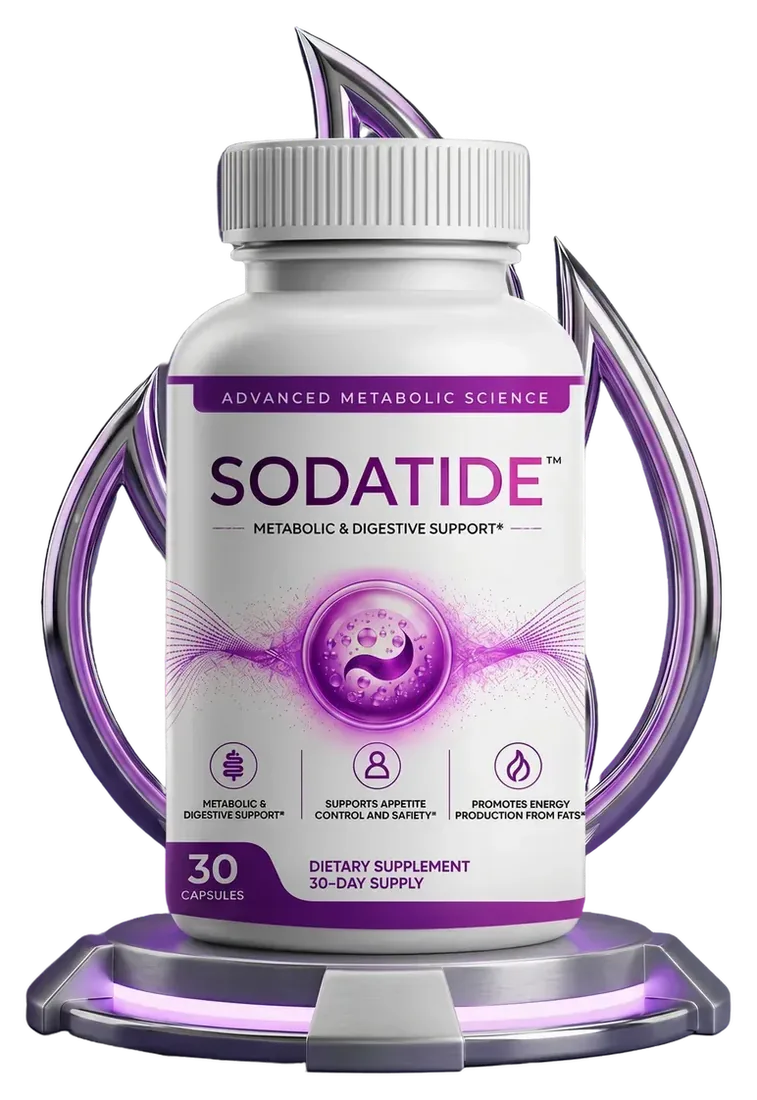
"Promotes Energy Production From Fats": What the Research on Gut Bacteria Shows
Quick answerSodatide’s front label claims “Promotes Energy Production From Fats.”* The biology behind that idea is real: gut bacteria ferment fiber into short-chain fatty acids such as butyrate, and in a 2017 human trial, infusing those acids directly into the colon raised fat oxidation and energy expenditure. But that trial used concentrated acids delivered straight into the gut, not a swallowed capsule, and no study has tested whether 211 mg of inulin, 100 mg of resistant starch or an undisclosed count of C. butyricum and A. muciniphila does the same thing.
What does "Promotes Energy Production From Fats" actually say?
Sodatide’s front label carries three asterisked claims: "Metabolic & Digestive Support," "Supports Appetite Control And Satiety" and "Promotes Energy Production From Fats." Every asterisk leads to the same line: the statement has not been evaluated by the FDA, and the product is not intended to diagnose, treat, cure or prevent any disease.
Like the other two, this is a structure/function claim — a category of statement about a normal body process that a supplement maker can print without pre-clearing it with the FDA, as long as it is truthful, not misleading, backed by substantiation on file, and carries the disclaimer. The agency does not test the finished bottle before it ships.
"Energy production from fats" is shorthand for fat oxidation — the metabolic process of breaking down fat molecules to produce usable cellular energy (ATP). This article traces the real research connecting gut bacteria, the fermentation products they make, and fat oxidation, then checks how closely that research matches what is actually on the Sodatide Supplement Facts panel: chicory root inulin, potato resistant starch, and a 36 mg blend of B. infantis, C. butyricum and A. muciniphila.
Short-chain fatty acids: the biological link between gut bacteria and energy
When gut bacteria ferment fiber such as inulin and resistant starch, they produce short-chain fatty acids (SCFAs) — mainly acetate, propionate and butyrate. Of the two fibers on the Sodatide label, resistant starch fermentation is particularly associated with butyrate. Separately, C. butyricum, the species in Sodatide’s probiotic blend named for making butyric acid, produces butyrate directly as part of its own metabolism.
These short-chain fatty acids are not just waste products. They are absorbed and used as fuel — by the cells lining the colon directly, and in smaller amounts by the liver and other tissues after absorption into the bloodstream. That absorbed-fuel role is the real, published mechanism behind a claim like "energy production from fats": fiber fermentation makes fatty acids, and those fatty acids get burned for energy.
What did a mouse study show about butyrate and cellular energy?
The clearest mechanistic demonstration of "bacteria-made fatty acid as fuel" comes from a 2011 study in mice, not humans (Donohoe et al., 2011). The researchers compared germ-free mice (no gut bacteria at all) to normally colonized mice and found that colon cells in the germ-free mice were in an energy-starved state: lower NADH/NAD+ ratios, reduced oxidative phosphorylation, and lower ATP levels, serious enough to trigger a cellular stress response called autophagy.
Adding butyrate back to those energy-starved, germ-free colon cells rescued their mitochondrial respiration and stopped the stress response. The mechanism, the authors showed, was butyrate acting directly as fuel burned for energy — not working through some separate signaling pathway. This is a strong, well-controlled piece of basic biology. It is also, importantly, a mouse study of isolated colon cells, not a human trial of a swallowed capsule, and it says nothing about body fat or whole-body energy expenditure.
What did a human trial find about short-chain fatty acids and fat oxidation?
The strongest human evidence linking short-chain fatty acids to fat-burning comes from a 2017 randomized, double-blind crossover trial in twelve men with overweight or obesity (Canfora et al., 2017). Researchers infused mixtures high in acetate, propionate or butyrate — or a placebo — directly into the colon, at concentrations matching what the colon reaches after a high-fiber meal, then measured fat oxidation and energy expenditure by indirect calorimetry.
The result: all three SCFAs raised fat oxidation
All three short-chain fatty acid mixtures significantly increased fasting fat oxidation (p<0.01) compared with placebo. The acetate and propionate mixtures also raised resting energy expenditure (p<0.05). All three raised PYY and reduced markers of fat breakdown from storage (free glycerol), consistent with the fatty acids being used as fuel rather than stored.
The critical detail: this was a colonic infusion, not a swallowed capsule
The researchers delivered concentrated SCFA mixtures (200 mmol/L) directly into the rectum and colon — bypassing digestion entirely — at concentrations designed to match what fiber fermentation produces. That is a controlled way to isolate the SCFA effect for a study, but it is not how a capsule works. A capsule’s fiber has to survive the stomach and small intestine, reach the colon, and then actually get fermented by resident bacteria into SCFAs at some lower, unmeasured concentration — a very different and less direct path from pumping the finished acids straight in.
What did the human Akkermansia muciniphila trial find about fat and metabolism?
The only published human supplementation trial of Akkermansia muciniphila, one of the three species in Sodatide’s probiotic blend, gave 32 overweight or obese, insulin-resistant adults 10 billion (1010) bacteria a day, live or pasteurized, for three months against a placebo (Depommier et al., 2019).
The pasteurized form produced several significant metabolic changes: insulin sensitivity improved by 28.6% (p=0.002), insulin levels fell 34% (p=0.006), and total cholesterol fell 8.7% (p=0.02). Fat mass trended down by 1.37 kg and body weight by 2.27 kg, but neither change reached statistical significance (p=0.092 and p=0.091). In plain terms: the trial found real, significant effects on insulin and cholesterol, and a fat-mass trend that did not clear the bar for statistical confidence in a 32-person pilot study.
The dose tested was 10 billion cells a day of a specifically pasteurized preparation. Sodatide’s label lists A. muciniphila as part of a 36 mg blend with two other species and states no CFU count or strain code, so there is no way to compare the dose in a Sodatide capsule with the dose in this trial. The Akkermansia Muciniphila Explained article on this blog covers that gap and the EFSA safety ceiling in more depth.
Three probiotics, two fibers, one capsule
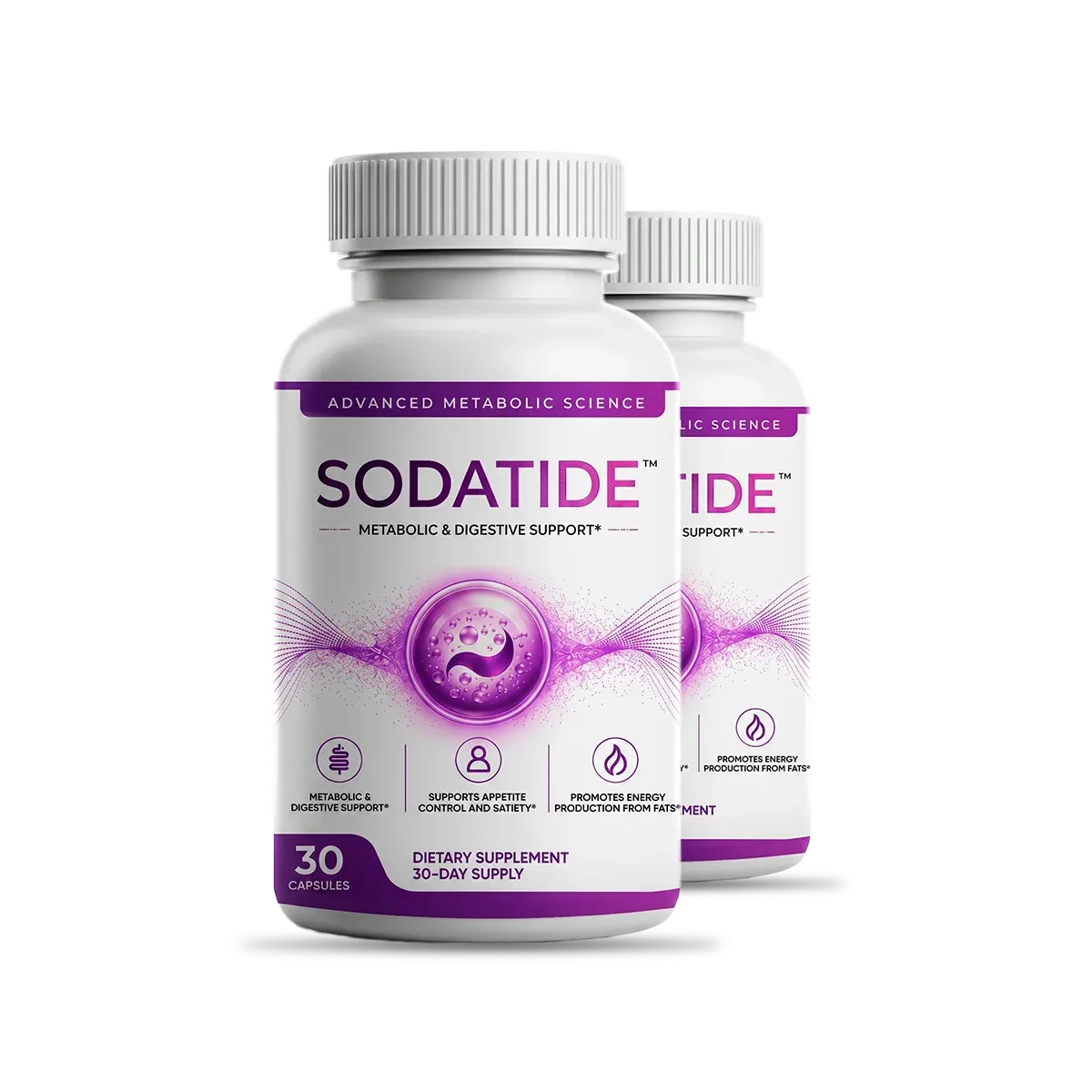
Sodatide pairs chicory root inulin, potato resistant starch and a 36 mg blend of B. infantis, C. butyricum and A. muciniphila. One capsule a day, from $49 a bottle, with a 60-day money-back guarantee.
How far is the evidence from the capsule?
| Evidence | What was actually tested | What Sodatide contains | The gap |
|---|---|---|---|
| Butyrate as cellular fuel | Germ-free mice, isolated colon cells (Donohoe et al., 2011) | Fiber fermented by resident gut bacteria into an unmeasured SCFA amount | Animal model; not a human capsule trial |
| SCFAs raising fat oxidation | Concentrated SCFA mixture infused directly into the colon, 12 men (Canfora et al., 2017) | 211 mg inulin + 100 mg resistant starch, swallowed and fermented over hours | Delivery route bypasses digestion entirely; concentration not matched |
| A. muciniphila and metabolism | 10 billion cells/day, pasteurized, 3 months, 32 adults (Depommier et al., 2019) | Part of an undisclosed-CFU 36 mg blend with 2 other species | CFU count not published; cannot be compared to the tested dose |
Why is this a structure/function claim and not a tested outcome?
U.S. dietary supplement law allows a structure/function claim about a normal body process — digestion, energy, appetite — to be printed without the FDA testing or pre-approving the finished product. The requirement is that the claim be truthful, not misleading, supported by substantiation the company keeps on file, and paired with the standard disclaimer. That is a materially lower bar than the clinical-trial requirement for a drug claim, and it is why a label can connect to published fermentation and SCFA biology in general, rather than a trial of the capsule itself.
That is not unique to Sodatide; it is how the entire structure/function claim category works for every supplement that uses it, including the other two front-label claims covered elsewhere on this blog. The underlying science is real and peer-reviewed. The specific product, at its specific printed dose, has simply not been the subject of its own clinical trial.
Where does this leave a buyer?
What the research supports
- Short-chain fatty acids made by gut bacteria, especially butyrate, are a genuine, published cellular fuel source.
- A 2017 human trial found that SCFAs increase fat oxidation and energy expenditure when delivered directly into the colon.
- A 2019 human trial found significant insulin and cholesterol improvements from a high, specific dose of pasteurized A. muciniphila.
What the research does not support
- No trial has infused SCFAs at the concentration a 311 mg fiber capsule might realistically produce after fermentation.
- The fat-mass change in the Akkermansia trial was a trend, not a statistically significant result, at a dose 10 billion cells a day — far above anything the Sodatide label discloses.
- No study has tested Sodatide itself, or its specific combination and amounts of fibers and probiotics, for fat oxidation or energy expenditure.
The biology connecting gut bacteria to fat-burning is real and worth understanding. Whether a capsule containing 211 mg inulin, 100 mg resistant starch and an undisclosed probiotic count reproduces any part of it has not been tested, in either direction.
Energy production from fats: FAQ
Does Sodatide burn fat for energy?
The label makes a structure/function claim, "Promotes Energy Production From Fats," which the FDA does not review before sale. The claim connects to real biology about bacteria-made short-chain fatty acids being used as fuel, but Sodatide itself has not been clinically tested for this effect.
What is a short-chain fatty acid?
A short-chain fatty acid (SCFA) is a small fatty acid, mainly acetate, propionate or butyrate, made when gut bacteria ferment fiber. SCFAs can be absorbed and used as fuel by colon cells and, in smaller amounts, by other tissues.
Did a real study show SCFAs increase fat oxidation in humans?
Yes. A 2017 randomized trial infused SCFA mixtures directly into the colon of 12 overweight or obese men and found increased fat oxidation and, for two of the three acid types, increased resting energy expenditure. The acids were delivered directly, not through a swallowed capsule.
What did the Akkermansia muciniphila trial find about fat mass?
A 2019 trial found a 1.37 kg average decrease in fat mass after three months of 10 billion cells a day of pasteurized Akkermansia muciniphila, but the result did not reach statistical significance (p=0.092). Insulin sensitivity and cholesterol improvements in the same trial were statistically significant.
How much Akkermansia muciniphila is in Sodatide?
The label does not say. Sodatide lists Akkermansia muciniphila as part of a 36 mg probiotic blend with two other species and does not publish a CFU count or strain code for any of them.
Is "Promotes Energy Production From Fats" FDA approved?
No. It is a structure/function claim, which the FDA does not pre-approve or review before the product ships. The label carries the required disclaimer stating the claim has not been evaluated by the FDA.