
Why Does a Probiotic Capsule List Silica? The Science of an Anti-Caking Agent
Quick answerSilica (silicon dioxide, food additive E 551) is listed under "Other ingredients" on the Sodatide label. It is a glidant and anti-caking agent that keeps fine powders — including the probiotic blend — flowing freely instead of clumping. The European Food Safety Authority re-evaluated it in 2018 and found no indication of toxicity at normal use levels, while flagging gaps in how its nanoparticle content is characterized. A 2021 lab study found no barrier damage in human gut cells at food-relevant doses.
Where does silica sit on the Sodatide label?
The Sodatide Supplement Facts panel lists silica as the last of four "other ingredients," after hypromellose, microcrystalline cellulose and magnesium stearate. Like the rest of that line, it carries no printed milligram amount — it is not one of the three dosed actives (chicory root inulin, potato resistant starch and the probiotic blend), but a manufacturing aid.
"Silica" on a supplement label means synthetic amorphous silica, a food-grade form of silicon dioxide, the same base chemical compound found naturally in sand and quartz but produced and purified differently for use in food and supplements. It carries the food additive code E 551 in EU labeling.
What is silica, and why is it in powdered products at all?
Food-grade synthetic amorphous silica is made industrially, either by burning silicon-containing compounds (fumed silica) or by precipitating it from solution (precipitated silica or silica gel). The result is an extremely fine, porous powder that is chemically inert and does not dissolve in water.
That fine, porous structure is exactly what makes it useful in a capsule. Silica particles sit between the other, larger powder particles in a blend and physically prevent them from sticking together — the same reason it is added to table salt and powdered coffee creamer to stop them from clumping in humid conditions. In pharmaceutical and supplement manufacturing, this function has two names depending on how it is used: a glidant (improves powder flow through equipment) or an anti-caking agent (prevents clumping in storage). The two roles overlap in practice, since a powder that resists clumping on the shelf also tends to flow more predictably when it finally reaches a capsule-filling hopper months later.
Why would a probiotic capsule specifically need this?
Sodatide’s 36 mg probiotic blend is a small amount of biological powder mixed with two fiber actives and three other excipients. Fine powders, especially a mix that includes bacterial material, are prone to static charge and moisture absorption, both of which cause clumping. A clumped blend does not meter evenly into capsule-filling machines, which can produce capsules with inconsistent fill weights from one to the next.
Silica addresses that mechanically, not chemically: it does not change what is in the blend, it changes how the blend behaves as a powder on the manufacturing line. This is a near-universal practice across powdered supplements and medicines that combine more than one ingredient at a small dose, not something specific to Sodatide.
The full ingredient list, label to capsule
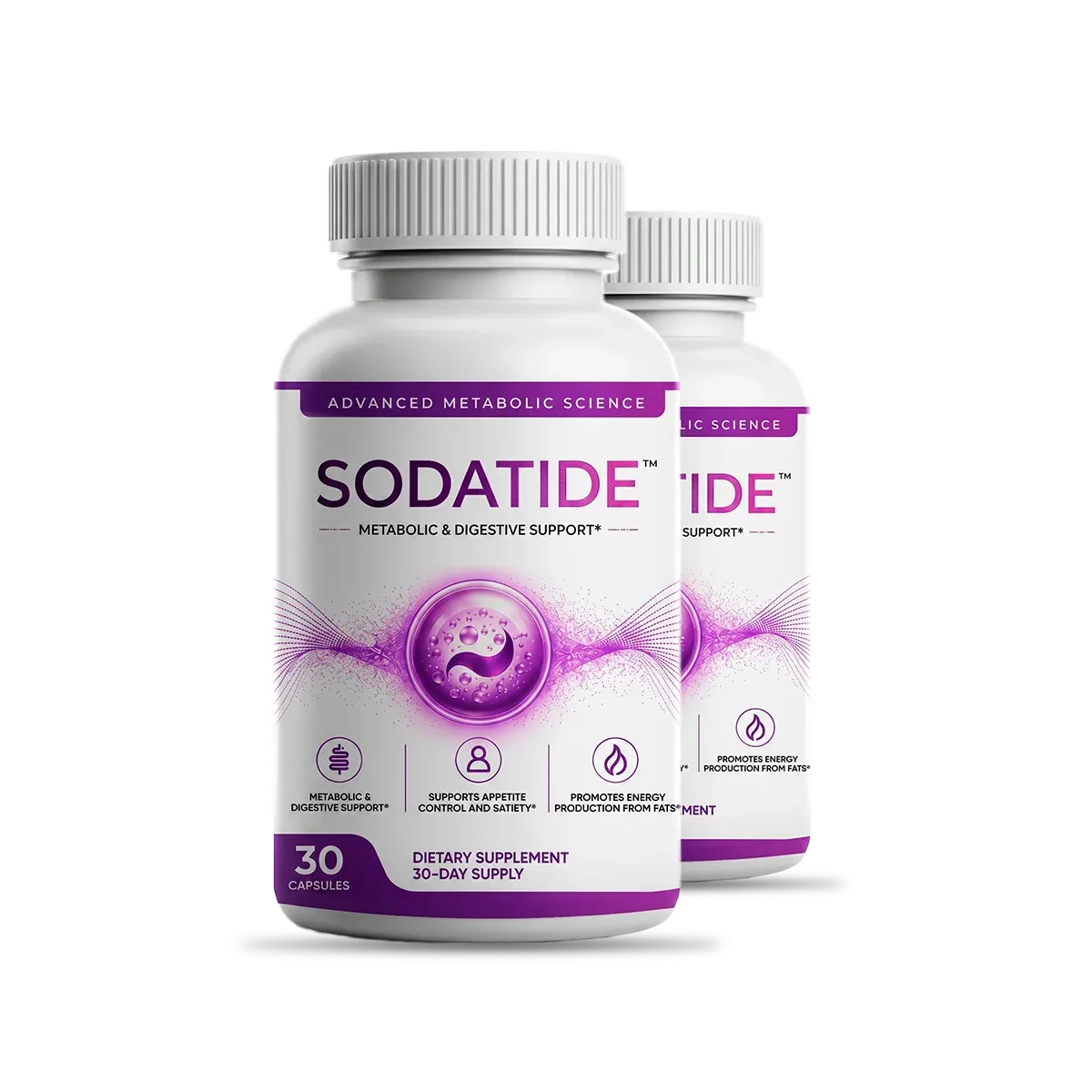
Two fibers, a 36 mg probiotic blend, a vegetarian capsule shell and the flow agents covered across this blog. One capsule a day, from $49 a bottle, with a 60-day money-back guarantee.
What did the European Food Safety Authority's 2018 review find?
In 2018, the EFSA Panel on Food Additives and Nutrient Sources published a formal re-evaluation of silicon dioxide (E 551) as a food additive (EFSA ANS Panel, 2018). The review covered the forms used as E 551, including fumed and precipitated silica, and reached several specific conclusions:
- Silicon dioxide "does not raise a concern with respect to genotoxicity."
- It "appears to be poorly absorbed" by the body, though some silicon-containing material was found in certain tissues in the studies reviewed.
- "There was no indication of adverse effects" in the available subchronic, reproductive and developmental toxicology studies, including some using nano-sized silicon dioxide.
- The highest real-world exposure estimates were "at least one order of magnitude lower" (roughly 10 times or more) than the no-observed-adverse-effect levels identified in those studies.
Based on that record, the panel found no indication of toxicity at the reported use levels. That is a genuinely reassuring set of findings for a widely used food and supplement additive.
What did a 2021 laboratory study on the human gut barrier find?
A 2021 study went looking specifically at how food-grade synthetic amorphous silica interacts with human intestinal tissue, using an advanced lab model rather than animals (Hempt et al., 2021). Researchers grew a co-culture of three human intestinal cell types, including mucus-producing cells, to mimic the real gut barrier, then exposed it to six different food-grade silica samples at up to 50 µg/ml for 48 hours — a concentration the authors describe as relevant to normal dietary exposure.
The result: no effects on cell viability, barrier integrity, microvilli function, or the release of inflammatory signaling molecules, for any of the six silica samples tested. A few samples showed small changes in iron uptake and in the activity of two specific genes, but the researchers found no consistent pattern linking those minor effects to any particular physical property of the silica tested.
So what is the open question, exactly?
Both the regulatory review and the lab study land in the same place, and it is worth stating precisely rather than rounding it up or down. The EFSA panel did not find evidence of harm. It also explicitly said it could not fully confirm its own long-standing "acceptable daily intake not specified" rating, because the current EU specifications for E 551 "do not exclude the presence of nanoparticles," and there was not a long-term study available that used a material matching the full size range those specifications allow.
In plain terms: the chemical itself has a long safety record at the doses people actually consume, but regulators have asked for better data on exactly how small the particles in commercial silica can get, and what that might mean over a longer exposure window than existing studies covered. That is a call for more precise characterization, not a finding of harm — and it is the kind of nuance this blog’s review standards ask us to keep in, rather than simplify away.
Silica and magnesium stearate both appear on the label. Are they the same thing?
No, and the Sodatide label actually lists both separately, right next to each other: "microcrystalline cellulose, magnesium stearate, silica." They solve related but distinct manufacturing problems.
Silica: flow and anti-caking
Silica's job, as covered above, is keeping powder particles from sticking to each other — preventing clumps so the blend pours and meters evenly.
Magnesium stearate: lubrication
Magnesium stearate's job is keeping the powder from sticking to the equipment — the capsule-filling machinery itself — so the blend releases cleanly from metal surfaces during high-speed production.
A formulation can need one, the other, or both, depending on the specific powders being combined. Sodatide's label lists both, which is common for a blend combining two different fiber types with a bacterial powder.
How can you spot flow agents on any supplement label?
Flow agents and anti-caking agents are easy to recognize once you know the short list of names to look for in the "other ingredients" section of almost any capsule or tablet:
- Silicon dioxide / silica — the anti-caking agent covered in this article.
- Magnesium stearate or stearic acid — the most common lubricants.
- Talc — another glidant, less common in supplements than in older pharmaceutical tablets.
- Croscarmellose sodium — not a flow agent itself, but often found in the same part of a label, helping tablets (not capsules) break apart after swallowing.
None of these require FDA pre-approval of the finished product, and none of them are required to carry a milligram amount on the panel. Seeing one or more of them on a label is ordinary, not a red flag by itself — the more useful question, as with any "other ingredient," is simply whether the brand discloses what is used, which Sodatide does.
Where does this leave a buyer?
What the research supports
- Silica is a standard, well-characterized glidant and anti-caking agent used across the food and supplement industry, not a Sodatide-specific ingredient.
- The 2018 EFSA re-evaluation found no indication of toxicity at normal dietary use levels.
- A 2021 in vitro study found no damage to a model human gut barrier at food-relevant silica doses.
What the research does not settle
- EFSA could not confirm its own prior "ADI not specified" rating due to gaps in how particle size and nanoparticle content are characterized in current specifications.
- The 2021 study is a 48-hour lab model, not a long-term human trial.
- The Sodatide label does not state how much silica is in each capsule, since it sits in the undosed "other ingredients" line.
Silica’s role in this capsule is mechanical — keeping a small, mixed powder blend flowing evenly through manufacturing — not a dosed ingredient tied to any of the three front-label claims. The safety record for the compound itself is reassuring at the doses involved, while regulators have openly flagged where the data could still be more complete.
Silica in supplements: FAQ
Is the silica in Sodatide the same as sand?
It is the same base chemical compound, silicon dioxide, but a different, purified form made specifically for food and supplement use, not raw sand or quartz.
Why does a probiotic capsule need silica?
Silica acts as a glidant and anti-caking agent, keeping fine powders like the probiotic blend from clumping and helping the overall blend flow evenly through capsule-filling equipment.
Did EFSA find silica unsafe?
No. The European Food Safety Authority's 2018 re-evaluation found no indication of toxicity at normal use levels. It also said current specifications do not fully rule out the presence of nanoparticles and asked for clearer particle-size data, without finding evidence of harm.
Does silica damage the gut lining?
A 2021 laboratory study using human intestinal cell cultures found no damage to barrier integrity, cell viability or microvilli function from six food-grade silica samples at dietary-relevant doses over 48 hours.
How much silica is in one Sodatide capsule?
The label does not say. Silica is listed under "Other ingredients," a category that does not require a printed milligram amount.
Is silica the same as magnesium stearate?
No. Both are listed on the Sodatide label, but they do different jobs: silica keeps powder particles from sticking to each other, while magnesium stearate keeps the powder from sticking to manufacturing equipment.